Toru Tokushige of Terra Drone: A Different Path to Global Impact
Toru Tokushige of Terra Drone: A Different Path to Global Impact
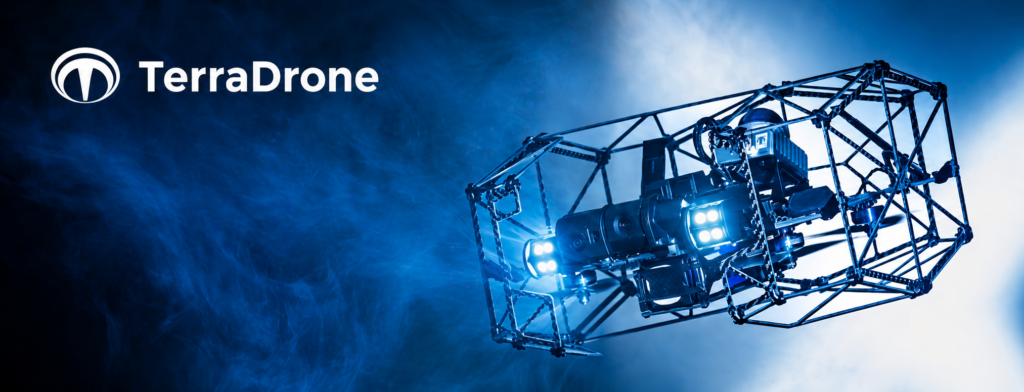
A Comparison That Only Goes So Far
Toru Tokushige, the CEO of Terra Drone, is often compared to Elon Musk. At a surface level, the comparison makes sense. Both are entrepreneurs working at the frontier of emerging technologies, shaping industries that did not fully exist a decade ago.
But the similarity largely ends there.
While Musk is known for starting with bold visions—colonizing Mars, transforming transportation, or building global satellite networks—Tokushige takes a fundamentally different approach. His work begins not with a grand narrative, but with practical problems: dangerous inspections, labor shortages, inefficient infrastructure, and the need for reliable, repeatable operations.
Instead of asking “What does the future look like?” he starts with “What problem can be solved today?”
Building from Real-World Use
Terra Drone did not begin as a defense company. It builts its foundation in civilian applications such as surveying, infrastructure inspection, and industrial operations. In these environments, technology is not evaluated by its potential, but by whether it works—consistently, safely, and at scale.
Systems are tested in real conditions, improved through repeated use, and refined based on operational feedback.
Only after that process does the technology begin to expand into larger systems and, eventually, into strategic applications.
A Shift in the Direction of Innovation
This is not just about drones, but about the direction of innovation itself. At Terra Drone, technology is built and proven in civilian use before moving into defense—a shift that is quietly reshaping modern warfare.
Traditionally, military technology has flowed in one direction: from defense to civilian life. The internet, GPS, and many advanced systems were first developed for military purposes before becoming part of everyday life.
But in the case of drones, that flow is increasingly bidirectional.
Civilian industries are now driving rapid innovation in areas such as software, sensors, automation, and cost efficiency. These technologies are deployed, tested, and scaled in real-world environments long before they are adapted for defense.
This shift is already visible in how operations are carried out.
Drones are used to check enemy positions, monitor movement, and assess damage—tasks that previously required soldiers to move closer to danger. They are also relatively low-cost, which allows them to be used in large numbers rather than relying on a few expensive systems.
As a result, the advantage is shifting toward how quickly and effectively these systems can be deployed and used in real conditions.
A Distinctly Different Approach
Toru Tokushige may be compared to Elon Musk, but his impact follows a different logic.
He is not pushing the world toward a vision.
He is building systems that quietly become indispensable—an approach grounded in Japanese industrial thinking—and in doing so, reshaping how technology moves from practical use into broader, strategic applications.
This is where Tokushige’s approach becomes particularly significant.
Rather than building technology for hypothetical scenarios, he builds systems that are already functioning in the real world. The value is proven through use, not projection. The capability is accumulated through operation, not declared through vision.
This reflects a broader pattern often seen in Japanese industrial thinking—not simply precision or quality, but a focus on reliability, continuity, and practical execution. This is so unique about Japan: a long history of accumulated practices and refinements, which function as a form of deeply embedded data that supports consistency and long-term improvement.
- Categories
- Japanese Products and Japanese SMEs
